
The reality is that finding the right electric hand planer can mean the difference, for many woodworkers and their projects, between a frustrating experience and bringing something to near perfection. Tired of trying to straighten and re-stop a warped board? When you absolutely have to take material off, this indispensable shop equipment will erase your mistakes faster than any eraser ever could! We’re here to test to the max and to determine the top performers that will save you time and ensure high-quality results. Read on — we’re going to search for the best planer for your shop.
Top 5 Electric Hand Planer:
1. Bosch PL2632K 6.5 Amp Hand Plane- Best Electric Hand Planer Overall
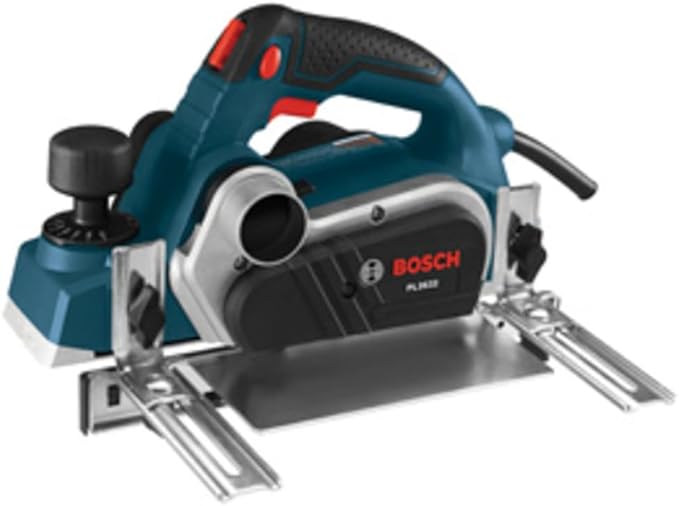
Now picture yourself looking down the side of a twisted, gnarly piece of wood (which you’re sure to ruin your project over) – oh wait – not when you have the Bosch PL2632K, which feels like it comes straight from the guts of a machine shop! Packing a serious punch, the 16,500 RPM 6.5-amp motor (which features no-load between 12,000 to 22,000 RPM) makes short work of rough stock – but, thanks to the enormous base that’s included, the finish is glass smooth and perfect for even your most demanding clients.
The Woodrazor micrograin carbide blades are both reversible and disposable — when one edge eventually dulls, simply remove, flip and re-install, slashing downtime by half These blades easily stay sharp for up to 1500 hours of use, and deliver one of the easiest installations in this class of thicknessers. Glide it along the dual-mount guide rail and you’ll hit a 0° or 3° plane every time – with nary a scratch, thanks to no-mar plastic overshoes. Concerned about accidental starts when you cling like a spider monkey? It’s got you covered with ambidextrous lock-off release and lock-on buttons that help you avoid any rogue firings and marathon work sessions. Accuracy isn’t just an afterthought either: the front and rear aluminum shoes are machined at the same time, ensuring your depth settings are not only accurate, but, thanks to separate inch and metric scales, instantly dialed in up to. 09375 inches in a flash.
When it’s time to pause, the spring-loaded stand lifts the planer, so its blade rests naturally on the wood but your surface stays free of damage. The 6.3-pound chassis even feels lighter than its spec sheet weight would suggest, thanks not only to the light weight of the base, but also a ball-joint cord swivel that neatly stows your power cable out of harm’s way. Stuff it all into a heavy-duty carrying case with blades, fence, shavings bag and wrench, and you have a portable workshop in one box. That’s why the PL2632K isn’t just another tool—it’s the most valuable player of your woodshop. Stay tuned, because coming up we have the unboxing of a cordless beast that might actually out-perform this one!
2. Dewalt Hand Planer (D26676) – Best Durable Electric Hand Planer

Imagine this: you’re standing in front of a piece of rough lumber and you have just one pass to a glass-smooth finish on the DEWALT DW680K planer. This puppy’s driven by a ferocious 5.5-amp motor, giving you up to 34,000 cuts per minute with maximum smoothness When you’re ready to keep the shavings slick and easy, get your hands on this planer. The 3¼-inch machined aluminum shoe is not just for show: It gives you finer finishes and quells vibration, so your hands remain rock-steady instead of jumpy. It’s easy to dial in the perfect depth, too: The oversized knob clicks forward or backward in 0.1 millimeter increments so it’s almost impossible to accidentally gouge a groove that’s too shallow or too deep. And then when that project marathon hits, it’s rock-solid balance and almost zero fatigue thanks to that finger-rest handle design—because no one likes the burn of a forearm workout halfway through tabletop.
In sum, if you’re a pro who needs performance, accurate depth control, and long-term comfort with DEFALT’s patented durability, this electric planer will be right by your side. Ready for more shop-savvy secrets? Stay tuned for the next tool spotlight, it’ll increase your craftsmanship accuracy to a laser-worthy level!
3. Metabo MultiVolt Cordless Hand Planer P18DSLQ4 – Best for Battery Life
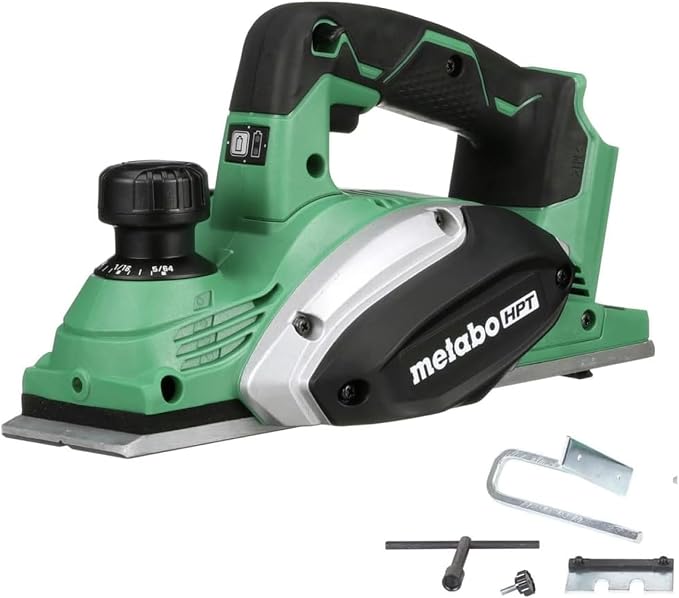
Imagine powering through your weekend DIY projects without ever hunting for an outlet—meet the Metabo MultiVolt Cordless Hand Planer P18DSLQ4, your ticket to cordless freedom. With a no-load speed of 16,000 RPM and a 3¼-inch cutting width, this beast shaves wood like a hot knife through butter, while its slim 7.3-pound frame and soft-grip handle keep wrist fatigue at bay even during marathon sessions.
Thanks to fade-free lithium-ion power, you get up to three times the runtime of old NiCd batteries, and a handy charge-indicator light throttles back surprises by warning you before juice runs low. Safety isn’t an afterthought either—the rear stand guards against accidental blade contact when you set it down, and precise depth adjustments let you control every pass to the nearest five-sixty-fourth of an inch. Plus, it plays nice with all Metabo HPT 18-volt slide-type batteries, so upgrading your toolkit won’t require a battery bonanza. This isn’t just a tool—it’s your productivity sidekick, turning tedious planing into a breeze. Stick around, because next up we’re revealing the secret weapon that’ll take your workshop game even further.
4. WEN 6534 8-Amp Electric Hand Planer – Best Bang for the

Imagine you’re just about to finish those stubborn doors, or even some rough lumber for that new bookshelf, with the WEN 6534 Electric Hand Planer, planing away with a powerful 8 amp motor that extends the life of any man the best way paradise does. So you’re shaving off that material faster than you can say, ”Is it smooth yet?.” Its generous 4-3/8-inch-wide cutting surface decreases the number of passes required to flatten a board, and the result is a time-saving and arm-relieving cut. Accuracy is king here: sixteen adjustable stops dial in depth down to 1/128”, so your joinery fits like a glove. Hit the on-command switch for the blade to start spinning (in this case, 8 feet of cord will do you just fine), and you’re ready to go; the built-in kickstand lifts the blade clear of your workpiece when you take your foot off the switch—no gouges, no drama.
Sawdust flying everywhere? Not on your watch. Two-way dust port; operates as a dust collector when used with a vacuum, creating a cleaner working environment, as well as sucking in dust when used on a workbench. Add the rabbeting guide and parallel fence bracket to produce rabbets that are clean, straight and smooth, without fail, whether you’re working with the most figured of woods or just don’t like tear out, and without ever picking up a quarter-inch of sandpaper.
5. CRAFTSMAN Wood Planer (CMEW300) – Best Budget Electric Hand Planer

Picture wrestling a warty, splintery board through the tool and not getting anywhere — until you plug in this CRAFTSMAN Wood Planer CMEW300. Its powerful 6 Amp motor boasts more power than a typical 4-amp saw, while the tough and durable WEN design focuses on creating a smooth and silky finish for your work pieces without crushing your bank account. Crank it up to 16,500 RPM, and you’re removing material faster than you can say “weekend project,” easing your workload just enough that you might, well, actually complete that DIY build. An 11.5-inch cast aluminum shoe reduces the chance of your cuts going off course, and you can ensure every edge looks pro-grade — not “my first try” — with the included 60-tooth blade.
Flip the dual-side dust port when the shavings start to fly, then close up shop next time with minimal mess and your lungs will thank you— no more post-session cleanup nightmares. And, with its overmolded ten click-in stop depth knob, you easily dial in precise synchrony between exact depth and how late your coffee arrives. Everything you need, from sharp blades to an edge guide and dust bag, ships in the box, so you’re ready to plane right out of the gate. So stay tuned for our next review, where we’re going to review the ultimate finish sander that’s going to make this planer’s work shin even more glorious!
Electric Hand Planer Buying Guide:
If you’re working with wood—whether building furniture, trimming doors, or smoothing rough boards—an electric hand planer can save you hours of sanding and chiseling. It’s a compact tool that takes the sweat out of flattening, leveling, and shaping lumber. But with so many options on the market, choosing the right one can feel tricky. This guide will walk you through the key things to consider before buying so you can find the best planer for your projects.
Power and Motor Size
The motor is the heart of any electric hand planer. It determines how easily the tool can cut through different types of wood.
-
Amps and Watts: Most corded planers range from 5–7 amps, while cordless models measure in volts (usually 18V or 20V). More power generally means faster cutting and less bogging down in dense hardwoods.
-
Project Type: If you’re a hobbyist working mainly with softwoods and small boards, a lighter planer will do the job. For frequent use on thick hardwoods or wide surfaces, look for a planer with a stronger motor.
Cutting Depth and Width
Two specs matter here: how deep the planer can cut in one pass and how wide the blade is.
-
Cutting Depth: Adjustable from shallow (1/64 inch) to deeper cuts (up to 1/8 inch or more). Shallow cuts are great for finishing, while deeper cuts remove more material quickly.
-
Cutting Width: Standard hand planers are 3-1/4 inches wide, which suits most DIY jobs. Wider planers are available but can be heavier and harder to handle.
Pro tip: Look for a model with an easy-to-use depth adjustment knob for precise control.
Blade Quality and Type
The blades (or knives) do the real work, so they deserve attention.
-
High-Speed Steel (HSS): Sharp, affordable, and easy to replace. Best for softwoods and light tasks.
-
Carbide Blades: More durable and stay sharp longer, especially for hardwoods or frequent use.
-
Reversible Blades: Many planers now use double-sided blades—when one side dulls, flip it around and keep going.
Check how easy it is to replace or adjust the blades. A hassle-free system saves frustration later.
Corded vs. Cordless
Both types have pros and cons, so your choice depends on where and how you’ll be working.
-
Corded Planers: Provide consistent power, making them ideal for workshop use or heavy-duty jobs. No need to worry about charging batteries.
-
Cordless Planers: Offer mobility and convenience, especially if you’re trimming doors, working on-site, or don’t have easy access to power outlets. Just be sure to have spare batteries for longer jobs.
Comfort and Handling
You’ll be guiding the planer across boards for extended periods, so ergonomics matter.
-
Grip Design: Rubberized handles reduce fatigue and improve control. Some models feature dual handles for extra stability.
-
Weight: Lighter tools are easier to maneuver, but heavier ones can feel more stable during cuts. Aim for a balance that feels comfortable in your hand.
-
Vibration Control: Quality planers often have features that reduce vibration, making the tool easier to handle over time.
Dust Collection
Wood planing creates a surprising amount of shavings. A good dust management system helps keep your workspace clean and safe.
-
Chip Ejection: Look for models with dual-sided chip ejection, allowing you to direct debris to the left or right.
-
Dust Bag or Vacuum Attachment: Some planers come with a dust bag, while others connect directly to a shop vac. If you do a lot of planing indoors, this is worth considering.
Additional Features to Look For
Sometimes, the small details make a big difference:
-
Kickstand: A retractable stand that props the planer up when not in use, protecting both the blades and your work surface.
-
Fence Guide: Ensures straight, consistent cuts—especially useful for edging boards.
-
Rabbeting Depth Guide: Lets you cut notches or rabbets for joinery.
-
Lock-On Button: Helpful for longer sessions, so you don’t have to hold the trigger the whole time.
Brand and Build Quality
Trusted brands like Makita, DEWALT, Bosch, and WEN are popular for a reason—they usually deliver reliable performance and have replacement parts readily available. Lesser-known brands can be tempting for the price, but check reviews to see if they hold up in real use.
Price and Value
Electric hand planers range from budget-friendly (around $60–$100) to professional-grade models ($200+).
-
Budget Planers: Great for occasional use and smaller DIY projects.
-
Mid-Range: A balance of features, power, and durability—ideal for serious hobbyists.
-
Pro Models: Heavier-duty, precise, and built to last. A smart investment if you’re a professional woodworker or do frequent projects.
Don’t just go by price—think about how often you’ll use the tool and what kind of jobs you’ll tackle.
Safety Considerations
Like all power tools, hand planers need respect. Look for models with safety features such as:
-
Lock-off switch: Prevents accidental startup.
-
Blade guard: Keeps the blades covered when not in use.
-
Sturdy base plate: Ensures smooth, stable cuts.
And of course—always wear safety glasses and hearing protection while working.
Final Thoughts
An electric hand planer can quickly become one of your most-used woodworking tools once you get comfortable with it. The right one depends on your needs: Are you trimming doors around the house, or shaping hardwood boards for furniture? Do you value portability, or steady workshop power?
Focus on power, blade quality, comfort, and dust collection first. Then balance your choice against your budget and frequency of use. With the right planer in your toolkit, you’ll spend less time sanding and more time bringing your projects to life.
Leave a Reply