
With so many chainsaws to choose from, it can feel dizzying trying to find the best one. You want to bring serious power to bear on your cutting, not blow your dough on the wrong tool. We’ve done the legwork, testing various top gas and electric models to discover the absolute best for any job — whether you’re just trimming a few tree limbs or working a demolition site. With this ultimate guide, you’ll definitely find the perfect unit to tame your garden work. Here are the models we narrowed down to.
Top 5 Chainsaws:
1. Husqvarna Power Axe 350i – Best Chainsaw Overall

Here’s the scene: you’re waist deep in logs, the sun bears down, you’re sweating and in place of fighting a rusty gas chainsaw that pushes as much as it cuts, you pull out the Huusqvarna Power Axe 350i from your holster of a belt and you’re a lumberjack hero. This is an all-in-one kit with a 40V lithium-ion battery and charger included, so there is no gas smell and endless maintenance – get started cord-free in minutes! It weighs just under eight pounds, making it a featherlight powerhouse — but it’s more powerful than many gas-powered models, easily slicing through thick limbs using an 18-inch X-Cut chain that stays sharp thanks to its commitment to a sturdy build and tool-free tensioning. Need a burst of extra oomph? Tap Boost Mode and you’ve got 25 percent more cutting capacity for when you need to charge through stubborn hardwood without breaking a sweat. This tool — that brushless motor isn’t just designed to be tough for the long haul; it also purrs instead of roaring, meaning your ears aren’t shredded and your neighbors don’t even know you’re performing a forestry operation in your backyard. Best of all, that one Husqvarna battery clicks into all of your other 40V tools as well, so you’ll never be searching for a spare. If you’re ready to give up the glue-smoke circus and level up to cordless precision and comfort, this is your new go-to. Oh, and if you thought that was cool, just you wait till you see the next tool we’ve got lined up – your workshop is about to get a whole lot happier!
2. Husqvarna 130 Gas Powered Chainsaw – Best Gas Chainsaw

Picture a stubborn log that wont split — now picture it from your backyard with the Husqvarna 130 Gas Powered Chainsaw in hand. Well, under the hood of the TP 428 you’ll for instance find a 38 cc X-Torq engine spanking the power-efficiency curve for 2 HP of cutting muscle as well as slicing through it by greatly reducing fuel absorption and cutting emissions by up to 60 percent—now you can clear brush without feeling guilty! Weighing in at just ten pounds (and boasting a 16-inch bar), this is more of your utility belt holster companion than your big scary chainsaw, and its LowVib technology means fewer hand-numbing tremors when you’re working your way through an all-day pruning marathon. The centrifugal air injection system removes dust and debris before it fills your filter, providing years of trouble-free starting. Also, while we’re on the subject of getting started, the choke/stop control and Smart Start engine are designed to let you fire things up with less pulls (read: no engine-flooding frustrations). The automatic oiler keeps the bar and chain in quality condition, which ensures easy, smooth cutting, and the inertia-activated chain brake ensures a confident stop every time.
3. Ego Power+ CS1611 – Best Battery-powered Chainsaw

Ever wish you could be out in the back yard chopping up fallen branches like a ninja, but WITHOUT the noxious (not to mention deafening) choking fumes of a gas-powered beast? Say hello to the EGO Power+ CS1611, the cordless chainsaw that approaches yard-work as yard-play. Its brushless motor shoves as much power as a 40cc gas saw, yet whispers so softly you could make a phone call while it roars (or refuses to roar), and you’ll be cutting through as many as 130 logs on a standard 4×4 before you hit the charger thanks to the 16-inch Oregon bar with razor-sharp chain zipping away at 20m/s. Speaking of juice, the universal 56 V ARC Lithium battery slips right in, so if you’re already in the EGO eco system, you only need one battery for everything—blowers, trimmers and so on, that saves you drawer space and that frenzied 4hide-cord-hunt. scramble. Tool-free chain tensioning — no poking around for a screwdriver when you want to turn a dial and get back to cutting logs flat to the ground — and automatic oiling, as well as a spill-free reservoir to keep the chain slick for more buttery cuts and less maintenance headaches. Designed to weather the storm, rain or shine, its robust, weather-resistant frame and zinc-plated bucking teeth stand up to the toughest conditions, so you can work hard, blades out, rain or shine. And the comfort ender: “To be outdoors behind the pressure washer holding onto that plushy detachable handle caddy feels so good, you may actually want to volunteer for yard duty again next weekend.”
4. SeeSii Mini Cordless Chainsaw – Best Mini Chainsaw

Take down stubborn trees like they were butter at the push of a button—meet the SeeSii Mini Cordless Chainsaw, your bite-sized bonsai buster. Clocking in at two and a half pounds, this mini ripper allows you to throw down tree-taming fury with one hand, making sure your arms won’t turn to jelly. The brushless high-efficiency motor kicks to life with dual 2,000 mAh batteries and provides 5 hours of run time — Power through a 6-inch log in less than 4 seconds so you’ll be finished before you are even ready to get started on Saturday’s honey do list. The presence of an automatic oiler ensures the chain remains slick, without the need for the hassle of messing with lubrication levels between cuts, and quick-tension system means adjustments are quick and painless. The lock-off safety switch is, well, easy to flick on and the near miracle worker of a slender frame will put those plump saws to shame. Whether youíre trimming hedges, cutting firewood or taking down tree limbs, this cordless wonder will have you getting the work while writing home about the results.
5. Oregon CS1500 – Best Budget Chainsaw
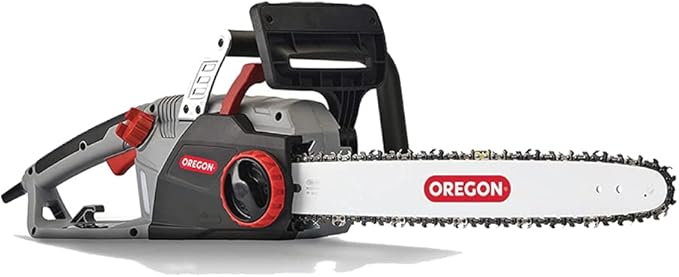
Imagine this: It’s yard duty, that overgrown limb is about to become the perfectly sized firewood you’ve always dreamed of and then, bam, the chain goes dull and you’re waiting on a sharpening service. Meet the Oregon CS1500, the budget chainsaw that mocks the very concept of downtime. And with its built-in PowerSharp self-sharpening system, you can go from dull to sharp in as few as five seconds with simply a pull of the lever — no tools required, and you can forget about making a run to the shop. Add in tool-free chain-tensioning, and it’s always cutting at the right bite, not one that’s struggling with too much slack or too many over-tightened links. Automatic Lubri-Tec oiling system ensures your chain and bar is constantly and consistently lubricated for less wear, longer chain life allowing you to completely focus on the task at hand. At 12.6 pounds, it’s a lightweight in its class, and gives you a clean, low-vibration cut at up to 5,500 RPM with the holding power of its aggressive grip handle, which makes all that gruntwork a walk in the park to finish in record time. Ergonomic grips and a reactive chain brake ensure that comfort and safety are not afterthoughts but integral to the design.
Chainsaws Buying Guide:
Whether you’re trimming backyard branches, cutting firewood, or tackling heavy-duty logging, a chainsaw can make the job faster and easier. But with so many options—gas, electric, cordless, big, small, pro-grade, or homeowner-friendly—it’s easy to get lost in the sawdust. A good chainsaw should match your workload, comfort level, and budget. This guide walks you through the key things to consider before buying.
Power Source: Gas, Corded, or Battery?
The first decision is how your chainsaw is powered. Each type has strengths and drawbacks.
-
Gas-Powered Chainsaws
-
Best for: Heavy-duty cutting, large trees, remote areas.
-
Pros: High power, portable, long run time with fuel.
-
Cons: Louder, heavier, requires fuel mixing and maintenance.
-
-
Corded Electric Chainsaws
-
Best for: Small yards, light trimming near a power outlet.
-
Pros: Lightweight, quiet, no fuel mixing, low maintenance.
-
Cons: Limited by cord length, not suitable for remote or big jobs.
-
-
Battery-Powered (Cordless) Chainsaws
-
Best for: Homeowners, medium tasks, quick clean-ups.
-
Pros: Portable, quieter, no fumes, easy start.
-
Cons: Battery life limits run time, less powerful than gas.
-
Tip: If you’re cutting firewood all winter or clearing storm damage, go gas. For yard pruning, cordless often strikes the right balance.
Bar Length: Size Matters
The bar length (the cutting blade) decides how thick a log you can cut.
-
12–14 inches: Small trimming, pruning, garden tasks.
-
16–18 inches: Versatile for most homeowners; handles medium logs and storm cleanup.
-
20 inches and above: Professional use; cuts large trees and heavy lumber.
A longer bar cuts bigger wood but adds weight and requires more skill to handle safely. Beginners often do better starting with a mid-range bar (16–18 inches).
Weight and Handling
Chainsaws range from 7 pounds to over 20 pounds. The right one depends on your strength and how long you’ll be using it.
-
Lighter saws reduce fatigue and are safer for overhead trimming.
-
Heavier saws offer more stability and power but require stamina.
Tip: Always test the balance. A chainsaw should feel comfortable in both hands, not tip forward or strain your wrists.
Safety Features You Shouldn’t Skip
Chainsaws are powerful tools, so safety should be non-negotiable. Look for models with these features:
-
Chain Brake: Stops the chain instantly during kickback.
-
Low-Kickback Bar/Chain: Reduces the risk of dangerous kickback.
-
Chain Catcher: Prevents a broken chain from whipping back at you.
-
Automatic Oiler: Keeps the chain lubricated for smooth, safe cutting.
-
Anti-Vibration System: Less hand fatigue, safer control.
Even the best chainsaw can be dangerous—pair it with protective gear (gloves, helmet, chaps, eye protection).
Ease of Maintenance
Some chainsaws need more upkeep than others. Things to consider:
-
Tool-less Chain Tensioning: Lets you adjust the chain quickly without a wrench.
-
Automatic Oiling System: Extends chain life with minimal effort.
-
Easy Access Air Filter & Spark Plug (gas models): Makes cleaning and tune-ups simpler.
Cordless and corded saws win on low maintenance, but gas saws remain king for raw power if you don’t mind regular servicing.
Noise Level
-
Gas saws are loud (90+ decibels)—ear protection is a must.
-
Cordless and corded saws are much quieter, making them neighbor-friendly.
If you live in a quiet neighborhood, a battery model will likely keep the peace.
Price Range & Value
Chainsaw prices vary widely:
-
Budget ($70–$150): Light-duty electric or small cordless saws for pruning.
-
Mid-Range ($150–$350): Most homeowner-grade cordless and small gas models; good mix of power and features.
-
High-End ($350+): Professional gas saws and premium cordless kits; built for frequent, heavy work.
Don’t just go for the cheapest option—match the saw to your actual workload. Buying too small means frustration, while too big is unsafe and overkill.
Brand & Warranty
Trusted brands like Stihl, Husqvarna, Echo, Makita, DeWalt, and Greenworks are known for quality and service networks. A solid warranty (2–5 years) is worth it for peace of mind.
Extra Considerations
-
Batteries & Chargers (Cordless): Check if they’re included; often sold separately.
-
Fuel Mix (Gas): Most 2-stroke saws need an oil/fuel mix.
-
Chain Sharpening: Either learn to sharpen or budget for replacements.
-
Storage: Gas models need fuel drained before long storage; battery models need proper charging care.
Final Thoughts
The “best” chainsaw is the one that matches your workload and comfort level. If you’re a homeowner handling small trees and branches, a lightweight cordless model is probably ideal. If you’re working in the woods or cutting large firewood logs, a gas-powered beast will serve you better.
Remember: balance power, bar length, and ease of handling. Always prioritize safety features and invest in protective gear. With the right choice, your chainsaw becomes a reliable partner instead of a risky burden.
Leave a Reply