
Looking for the best car speakers to transform your driving experience? If you’re frustrated with dull audio and crave vibrant, powerful sound, you’re in the right place. Our expert guide reveals top-rated car audio solutions to boost performance and thrill your senses. Get ready to enjoy crystal-clear tunes that energize your daily commute. Dive in now to discover high-performance speakers that turn every ride into a sensational adventure.
Top 5 Car Speakers:
1. Rockford Fosgate Prime R165X3 – Best Car Speaker Overall

It’s time to turn up the music, and crank it up loud with your new Rockford Fosgate Prime R165X3! This 6.5” 3-way full range speaker pushes out some breathtaking sound to take your ride from background music to concert experience. Rated at 45 watts RMS and designed to handle up to 90 watts, it guarantees you’ll get more than just factory-grade sound. One of the best features of this model is the nifty polypropylene cones. The lightweight components have been engineered for superior sound, and the silk dome Piezo tweeter and midrange provide rich mids and highs. You truly will feel every bass drop, every vocal nuance. Additionally, it comes with grills and mounting accessories, installation is a breeze.
The other great thing is how small it is. With only a 5.51 inch mounting diameter and 2.15 inch mounting depth these speakers can fit in any space while truly turning heads. Many rivals simply can’t play sound that loud while others diminish in size when power is high. But my favorite part is the fun sound coming out of this speaker. It just brings every genre to life, from rock to pop to classical. Nowhere near as bad of an experience as your favorite songs being a chore to listen to. But I should add that sometimes the high volumes result in slight distortion. This isn’t a disaster though and not something that takes away from its overall performance but is something to bear in mind to turn the volume down a nudge. Rockford Fosgate’s Prime R165X3 is one of the best car speakers overall, thanks to its low price, high quality and excellent sound. If you’re looking for premium sound during your commutes, it’s worth investigating this product in more detail.
2. Kenwood KFC-1666R Road Series – Best Value Car Speaker

Looking forward to enhancing your car’s sound system? From the Manufacturer Kenwood KFC-1666R Road Series coaxial car speakers bring a solid sound quality that makes any car audio affair sound good. With 300W peak power, music sounds better in quality and you can listen comfortably. You’re going to love the 30 Watt RMS of nominal power for beautiful highs and lows. Crispy treble and mellow bass: delivered by high quality driver. Every note sounds rich and full, and even long drives feel shorter with a frequency response of 40Hz to 22kHz.
Installation is a smooth process thanks to the robust magnet design and reduced tweeter height. Yeah, these bad boys will easily slide in your horse with minimal effort, ‘ cause boys and girls, these aren’t your grandpa’s speakers. Rugged cases add extreme protection while still looking good. One distinctive feature of these speakers is their 4-ohm impedance for an even power distribution. This design not only boosts performance of the speakers but ensures a consistent listening experience no matter what seating position. For your car stereo, they’re pretty damn good. On a lesser note, they don’t come with detailed installation instructions, but there are plenty of online resources to help you through. What is so remarkable about the KFC-1666R is undeniably its value. Without going broke, you have the opportunity to enjoy amazing sound quality and the reliability of the Bang and Olufsen brand. Get lost in a world of sound. Find out more about this amazing product!
3. BOSS Audio Systems CH6530 – Best Entry-Level Car Speaker

This entry level car speaker delivers good nough sound performance at a low price. It is a pretty versatile one as well, since it measures 6.6 x 6.6 x 2.4 inches, and that means it would be able to conveniently fit on pretty much any type of vehicle. Listening to crisp highs and receding lows with a frequency range of 100 Hz to 18 KHz. With a 90 dB sensitivity, your music of choice will always sound its best, even at low volumes. And its poly injection cone, and rubber surround will deliver the sound that will last for years. Plus, the 1-inch voice coil optimizes midrange frequency performance and sound reproduction.
One standout feature? The. 50″ piezo tweeter for sharp highs. You’ll love details that pop in your favorite tracks. A further benefit is ease of installation. And with a mounting depth of only 2.1 inches and a 5.5-inch mounting hole, installing them in your garage won’t eat up your entire weekend. Only minor drawbacks exist. These speakers are very powerful, but may not have as much bass depth as more expensive options. But they’re still more than adequate for the everyday listening experience. You’ll enjoy how they enhance the drives. With BOSS Audio Systems CH6530, there’s no more having to sacrifice good sounds for price.
4. JVC CS-J620 – Best Affordable Car Speaker
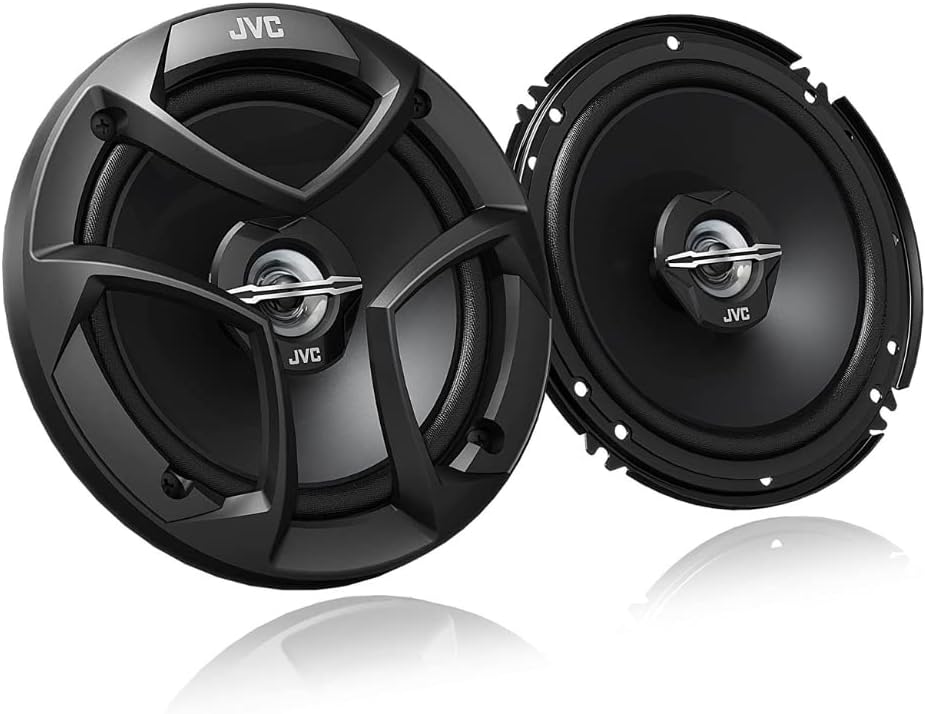
And after rigorous testing, they’re the best cheap car speakers you can buy. But coming in at the peak power of 300W and 30W RMS, they make any trip a concert. Enjoy increased sound quality for every song you play. These speakers can deliver 35Hz to 22KHz offering great sound balance. A 92 dB sensitivity means your music will blast, NOT the speakers! Mids are clear and resonate well, while highs are sparkling, ensuring each and every track sounds great.
Eye-catching design decisions stand out. Sharp black ABS composite grills look great and can take everyday abuse. Rubber and cloth diaphragms contribute to durability as well as great sound. Installation proves painless. Featuring a low top mount installation depth of only 1-23/32″, the speakers can easily be installed into a wide variety of vehicles. With pre-drilled mounting holes, installation is quick, easy and does not require professional help. What do I love? The sound that comes out of these at this price point is competing with devices that cost five to ten times more. One tiny trade-off: Bass response may seem less thumpy at lower volumes, though fiddling with the settings can compensate for this. Take the JVC CS-J620 on an audio joyride and hear the difference for yourself!
5. Pioneer F-Series TS-F1634R – Best Budget Car Speaker

They perform incredibly well while also not costing the bank -the best affordable car speakers out there. Capable of handling power up to 200W and giving 25W nominal, these speakers will give you sound that will be good as you drive. Their 2-way coaxial construction gives you balanced lows and brilliant highs, and everything in between. An 88dB sensitivity rating enables the speakers to carry both the music as well as the video and you can turn them up without listening strain Percussion Rhythm Be moved by the musical rhythm with the 5.75″ Injection-molded polypropylene cone. Their classic 6.5” size also makes for an easy fit for many cars to minimize installation work without minimizing sound quality.
The sleek black finish of this Pioneer enhances the interior of any vehicle. It will make any interior look cool and modern, combining great sound with clean look. What impressed me most? You won’t find better bang-for-the-buck in this speaker set. You get glorious sound quality without emptying your wallet. That said, although these sound great, true audiophiles may want a bit more rumbly bass. Yet they have great sound generally for everyday listening.
Car Speakers Buying Guide:
Upgrading your car’s speakers is one of the easiest ways to transform your driving experience. Factory-installed speakers often lack depth, clarity, and power—leaving music sounding flat or distorted when you turn up the volume. A good set of aftermarket speakers, however, can bring out details you’ve never noticed before, from crisp vocals to deep bass lines.
But with so many options on the market, choosing the right speakers can feel overwhelming. This guide will break down what you need to know before buying, so you can match your budget and sound preferences with the best fit for your car.
Speaker Size and Compatibility
The first step is knowing what will fit in your vehicle. Car speakers come in different sizes, the most common being 6.5-inch, 6×9-inch, 5.25-inch, and tweeters. Your car’s make and model will determine what sizes can be installed without modifications.
It’s worth checking your car’s manual or using an online fit guide to make sure you don’t buy speakers that won’t fit. While some people choose to cut panels or add brackets to fit bigger speakers, beginners usually prefer a direct replacement for simplicity.
Speaker Types: Coaxial vs. Component
You’ll often come across two main categories of car speakers:
-
Coaxial (Full-Range) Speakers – These combine multiple speaker elements (woofer + tweeter, sometimes even a midrange) into one unit. They’re affordable, easy to install, and perfect for people who just want an immediate upgrade over factory sound.
-
Component Speakers – These separate the tweeters, woofers, and crossovers. Because each part can be mounted in different spots, they produce a more precise and detailed sound. They do, however, cost more and require more effort to install.
If you want something simple and budget-friendly, coaxial is the way to go. If you’re aiming for audiophile-level sound and don’t mind a bit more installation work, component speakers are worth the investment.
Power Handling (Wattage)
Power handling tells you how much power your speakers can take without getting damaged. This is usually listed as RMS (continuous power) and Peak Power.
-
RMS Power is the real number you should pay attention to. It shows how much power the speaker can handle consistently.
-
Peak Power is the maximum it can handle for short bursts, but it’s not a reliable measure of performance.
If you’re running your speakers directly off your car stereo, you don’t need speakers with very high RMS ratings. But if you plan to use an external amplifier, matching the amp’s output to your speakers’ RMS rating will give you cleaner, louder sound without distortion.
Sensitivity
Sensitivity measures how efficiently a speaker converts power into sound. A higher sensitivity rating means the speaker can produce more sound with less power.
-
If your car stereo has low power output (like most factory head units), you should look for high-sensitivity speakers (90 dB or higher).
-
If you’re using a powerful aftermarket amp, you can go with lower-sensitivity speakers, since you’ll have enough power to drive them.
Materials and Build Quality
The quality of materials plays a huge role in how long speakers last and how they sound.
-
Woofer Cones: Polypropylene is common, durable, and resistant to heat and moisture. Some higher-end speakers use woven fabrics or composites for better performance.
-
Tweeters: Soft materials like silk produce smooth highs, while metal or ceramic tweeters give you brighter, sharper sound.
-
Surrounds: This part allows the cone to move. Rubber surrounds usually last the longest and provide good response, while foam and cloth are cheaper but less durable.
Since car interiors face heat, cold, and moisture, choosing speakers with durable materials ensures they won’t wear out quickly.
Frequency Range
Speakers are rated for the range of sounds they can reproduce, measured in Hertz (Hz). A wider frequency range usually means better detail, though it also depends on design.
-
Typical car speakers cover 50 Hz – 20 kHz.
-
Subwoofers go lower (20–200 Hz), while tweeters cover the upper range (2,000–20,000 Hz).
For most buyers, frequency range is less critical than power handling and sensitivity, but it’s still useful to know if you want strong bass or sparkling highs.
2-Way vs. 3-Way Speakers
When shopping, you’ll often see labels like “2-way” or “3-way.”
-
2-Way Speakers (Woofer + Tweeter): Handle bass/midrange and highs. These are the most common and generally provide a balanced upgrade over stock speakers.
-
3-Way Speakers (Woofer + Midrange + Tweeter): Add an extra driver for more detail, especially in the midrange. They can sound richer but are usually more expensive.
Some brands even offer 4-way speakers, but the improvement is often subtle compared to going from 2-way to 3-way.
Brand Reputation and Budget
Car speakers come in all price ranges, from budget-friendly $30 pairs to audiophile-level $500+ sets. Some of the most trusted brands include Pioneer, JBL, Kicker, Rockford Fosgate, Alpine, Infinity, and Polk Audio.
Budget speakers can be a great upgrade over factory sound, but if you’re serious about audio quality, it’s worth investing a little more. Consider how much time you spend in your car and whether music quality is a priority before setting your budget.
Installation and Extras
Installing new speakers can range from a simple DIY project to something that requires professional help.
-
If you’re replacing factory speakers with the same size, installation is usually straightforward.
-
Component systems, or adding amplifiers and subwoofers, may need wiring adjustments and mounting work.
You may also need speaker harnesses, mounting brackets, or sound-deadening materials to reduce vibrations and road noise. Spending a bit on installation accessories can make a big difference in overall sound quality.
Matching with Your System
Finally, think about your overall system. Upgrading just your speakers will improve sound, but pairing them with a good head unit or amplifier will unlock their full potential. If you love deep bass, adding a dedicated subwoofer might also be worthwhile.
Final Thoughts
Buying car speakers isn’t just about grabbing the loudest pair you can find. It’s about balancing size, type, power handling, and sensitivity with your car’s setup and your personal taste in music. If you prefer simplicity and affordability, coaxial speakers will serve you well. But if you’re chasing clarity and precision, component speakers paired with an amp can make your car feel like a concert hall.
Investing in quality speakers doesn’t just change how your music sounds—it changes how you feel every time you get behind the wheel.
Leave a Reply