
The hunt for the best mechanical keyboard can be daunting. If you’re sick of using mushy, unsatisfying keys, you’ve come to the right place. A good keyboard will change the way you type every day, with great tactile feedback and accuracy. We’ve done away with the guesswork by testing dozens of models to discover the right one for your desk and budget. Let’s take a closer look at the keyboards that offer a really enhanced feel and performance.
Top 5 Mechanical Keyboards:
1. Cooler Master MK770 – Best Mechanical Keyboard Overall
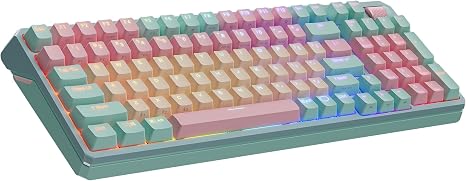
Imagine you’re scrolling through documents, playing games, even finding those midnight memes — on one sleek, smooth gadget that won’t kill your vibe. Enter the Cooler Master MK770, a 96 percent mechanical marvel that retains your numpad while offering up some extra free desk real estate. Its factory-lubed Kailh Box V2 switches give you snappy tactile feedback and a smooth press, so every click feels like a victory lap. And with the gasket-mount design featuring silicone shock absorbers, keystrokes feel whisper-clean and vibration-free, so your neighbors (and your sanity) both survive those epic late-night raids. Hot-swap capability allows you to change switches on the fly—simply pop them out and drop in the new switch you want. No sweat. Hybrid wireless performance provides seamless switching to and from Bluetooth 5.1 wireless and 2.4GHz wired modes, an essential feature for gamers who prioritize lag-free gaming on the go and at their home setup. The three-way roller at the top doubles as your volume knob and all the RGB-mode cycling you could ever want literally at your fingertip. Factor in dedicated macro keys, adjustable feet and a concealed dongle pocket, and you have a keyboard that is just as considerate as it is playful. And ready to take your desk game to a whole new level? Don’t go away—up next: a mouse that clicks harder than your high score.
2. Razer Pro Type Ultra – Best Mechanical Keyboard for the Office

Picture yourself flying through those Monday morning emails in perfect peacefulness as your fingers flow over the whisper-quiet mechanical switches in the Razer Pro Type Ultra — with in-built sound-dampening foam, your colleagues on the desk next to you might start thinking you’ve gone telepathic. And the slim keycaps feature a soft-touch surface and a clean finish with a tactile feel, while the fingerprint-resistant treatment makes them wear easily through keyboarding homework, for example. And when you are logging in marathon workdays, the cushy palm and wrist rest makes your palms feel at home as you power through spreadsheets or as you write up a report right before a deadline without missing a beat.
Flexibility is king here: flip between wired, Bluetooth, and Razer’s HyperSpeed 2.4 GHz wireless mode at a single press of a button, then pair up to four devices and switch between them on the fly—whether you’re balancing your PC, tablet, and that rogue smart TV in your home office. Battery anxiety? Forget it. This keyboard will last you over 200 hours of wireless playtime! Need custom shortcuts? Programmable macros and remappable keys allow you to automate the most arduous tasks, so you can win back your precious minutes for coffee breaks or — let’s be real — that stealth YouTube scroll. Dual kickstands adjust to your position, so whether you’re leaning in for the big presentation, or lounging back on the sofa as you browse, you can always work at the angle that suits you best. The Pro Type Ultra is your quiet assassin in a world full of noise and distraction – Turn every click into a satisfying “thock” of productivity in your workspace from the home to the office. Ready to kick your office setup up a notch? So don’t go anywhere, because up next, we’ll back with a gadget that essentially puts your desk on wheels.
3. NuPhy Halo75 V2 – Best Wireless Mechanical Keyboard

Picture this: You’re managing emails on your laptop, tablet, phone, and PC—and with a flick of your thumb, you’re transitioning the NuPhy Halo75 V2 from work mode to your gaming rig. This 75-percent wonder hides 83 hot-swappable keys so you don’t even need a soldering iron to dial in your best switch life. Its triple-play connectivity (Bluetooth, 2.4 GHz dongle and USB-C) lets you seamlessly toggle between devices without a dropped input, and the 1,000 Hz polling rate keeps your inputs so immediate, lag’s a thing of the past and you’re headshots ahead of the competition. Time to power through a marathon session? The 4,000 mAh batter built into the Huntsman Mini has enough juice to power it for up to 307 hours with the lights off – or up to nine hours of fully-RGB glowing, so you can game through the longest sessions and never run out of power. And, with open-source QMK and VIA support, you can map every key, program macros, and choreograph lighting effects to your heart’s content. All of that in a slim, efficient package that won’t hog desk space and looks pretty sharp doing it. Looking to take your setup to an even more advanced level? So stick around, because up next we unbox a peripheral that could very well steal this keyboard’s thunder!
4. Satechi SM1 – Best Mechanical Keyboard for Macs

Just think about replacing your Mac’s keyboard with one that feels like it was tailor made for you—that’s the Satechi SM1 in a nutshell. Its low-profile brown mechanical switches combine buttery-smooth key presses with the perfect tactile bump, meaning that typing emails feels as nice as landing headshots. Geared toward multitaskers, it connects to as many as four devices — your Mac, iPad, Windows PC or Chromebook — and you can romp among them with a speedy FN+ number combo, so your flow never misses a beat. The compact 75% layout leaves a lot more room on your desk for your cup of coffee (or that extra monitor) but also with the aluminum frame construction and adjustable feet give you the style and ergonomics you want in a keyboard. With three brightness levels and fourteen patterns, the backlit keys ability means you can game or work in any lighting, while the 2,500mAh battery keeps you waiting up to two months on a single charge — no more cable scramble mid-that project. Browse the web and send an email on your Mac with native keycaps on the Mac layout, even with your Windows based computer. Then press all the keys at once on a ‘magic’ keyboard that’s simply ordinary. Sleek, versatile and designed to keep up with your creativity, the Satechi SM1 is the ultimate sidekick for Mac fans – but keep reading, because our next choice will melt your brain.
5. EPOMAKER x Feker Galaxy80 – Best Budget Mechanical Keyboard

Imagine it: you’re pounding away at emails or click-clacking bad guys to death and each keypress feels like cutting through a pat of butter on a warm piece of toast—that’s the EPOMAKER x Feker Galaxy80 at work. Tucked neatly inside an aluminum alloy housing, these 88 gasket-mounted marvels are based around a five-layer PORON and foam sandwich designed to minimize chatter and cradle your fingertips in resoundingly pleasing, hi-fi-grade clicks. Swap switches while the board is on, swap LEDs, change colors, layouts and everything on the fly. And whether you’re plugged into USB-C or floating across wireless (via Bluetooth 5.0 or 2.4 GHz), you can rock on for up to 30 hours straight. The south facing LEDs make a bright and clear color and Double-shot PBT Keycaps with top printed design, Pudding keycaps has unique appealing, prismatically beautiful Colors with Double shot seamless shine-through legends No one is better than us in providing LED color options The MF108 has 19 pre-programmed with 20 more to set any which way you like via the software while the colors shine bright and true Do you want your keyboard to speak your RGB lighting to your style or your style? And, since come on, cloud-like typing comfort is non-negotiable, that soft, cushy gasket mount offers fatigue-free bliss while you crush deadlines (or dragons). And all of this doesn’t break your wallet. Ready to level up your setup? Don’t go away—up next, we’re watching as a keyboard goes warp speed!
Mechanical Keyboards Buying Guide:
Mechanical keyboards have exploded in popularity in recent years. Gamers love them for their precision, typists swear by their comfort, and enthusiasts treat them like customizable art projects. But with so many switches, layouts, and features, it’s easy to feel lost when shopping for one. This guide will walk you through the key things to consider before buying, so you can find the right mechanical keyboard for your needs.
Understand What Mechanical Keyboards Are
Unlike membrane keyboards, which use a rubber dome to register key presses, mechanical keyboards use individual switches under each key. This makes them:
-
More durable (often rated for 50+ million presses).
-
More responsive with consistent feel.
-
Customizable in terms of switches, keycaps, and even sound.
If you type a lot, play competitive games, or simply want a keyboard that feels satisfying to use, mechanical is a great choice.
Know Your Switch Types
The “switch” is the heart of a mechanical keyboard. It determines how a key feels, how much force it takes to press, and the sound it makes. The three main categories are:
-
Linear switches (e.g., Cherry MX Red, Gateron Yellow)
-
Smooth, with no tactile bump.
-
Popular with gamers who want fast, uninterrupted keystrokes.
-
-
Tactile switches (e.g., Cherry MX Brown, Boba U4T)
-
Have a noticeable “bump” in the middle of the press.
-
Great balance for both typing and gaming.
-
-
Clicky switches (e.g., Cherry MX Blue, Kailh Box White)
-
Tactile bump plus an audible click sound.
-
Loved by typists who want feedback but not ideal if you share space (they can be loud).
-
Tip: If you’re new, tactile switches are usually the safest bet.
Pick the Right Keyboard Size
Mechanical keyboards come in different layouts and sizes. Your desk space and typing habits will help determine what’s best:
-
Full-size (100%): Includes number pad, function keys, and arrows. Best for heavy data entry or if you like having every key.
-
Tenkeyless (TKL, 80%): No number pad, but still has arrows and functions. Popular with gamers and people wanting more desk space.
-
75%: Slightly more compact than TKL, squeezing keys closer together. A good middle ground.
-
65%: Drops the function row, keeps arrows. Small, portable, and practical for minimalists.
-
60%: Extremely compact, no arrows or function row. Great for travel and clean setups but takes time to get used to.
Tip: If you’re unsure, TKL or 75% is a comfortable starting point.
Consider Build Quality
Not all mechanical keyboards are built the same. Pay attention to:
-
Case material: Plastic cases are lighter and cheaper, while aluminum cases feel sturdier and premium.
-
Plate: A metal or plastic plate under the switches adds stability and affects typing feel.
-
Weight: Heavier boards don’t slide around, lighter ones are easier to carry.
A solid build not only feels better but also lasts longer.
Wired vs. Wireless
-
Wired: Lowest latency, no battery charging. Still the go-to for competitive gaming.
-
Wireless (2.4GHz or Bluetooth): Cleaner look, portable, and works across multiple devices. Modern wireless keyboards are much better, with almost no noticeable lag.
If you want a neat setup and don’t play esports-level competitive games, wireless can be worth it.
Hot-Swappable vs. Soldered
-
Hot-swappable: Lets you pull out switches and replace them without soldering. Perfect if you want to try different switches or customize easily.
-
Soldered: Permanent switches unless you’re willing to desolder/resolder. Often cheaper, but less flexible.
If you’re just starting, hot-swappable is the safer bet—it future-proofs your keyboard.
Keycaps Matter More Than You Think
Keycaps affect both feel and sound.
-
ABS plastic: Cheaper, can get shiny over time.
-
PBT plastic: More durable, textured, and resistant to wear.
-
Double-shot or dye-sub legends: Ensure the letters don’t fade.
You can always upgrade keycaps later, but starting with decent PBT caps makes a big difference.
Think About Sound
Mechanical keyboards can be loud or quiet depending on switches and build. If you work in an office or share space, look for:
-
Quieter switches (like linear or silent tactile).
-
Foam dampening inside the case.
-
O-rings or switch pads to reduce noise.
If you love that “thock” or “clack,” look for boards with good acoustics and stiffer builds.
Extra Features to Look For
Depending on your use, these can be nice bonuses:
-
RGB lighting: Full per-key customization or simple single-color backlight.
-
Programmable keys/macros: Useful for gaming or productivity shortcuts.
-
Knobs & media controls: Handy for volume and quick adjustments.
-
Software support: Some boards let you remap keys or create profiles.
Budget & Price Ranges
Mechanical keyboards range widely in price:
-
$40–$80: Entry-level (Redragon, Keychron, Logitech budget lines). Great for beginners.
-
$80–$150: Mid-range with hot-swap, wireless, and better keycaps. Best value for most people.
-
$150–$300+: Premium builds, aluminum cases, custom parts, enthusiast features.
Don’t feel pressured to go high-end right away—many budget boards are excellent.
Customization & DIY
One of the joys of mechanical keyboards is making them your own:
-
Swap switches for different feels.
-
Change keycaps for aesthetics.
-
Add foam mods for sound.
-
Lube switches for smoother typing.
Even small tweaks can make a huge difference, so don’t be afraid to experiment.
Final Thoughts
Buying a mechanical keyboard isn’t just about picking a tool—it’s about finding something that fits your typing style, your space, and maybe even your personality. Start by deciding what size you need, which switch type feels best, and whether you want future-proof options like hot-swap. From there, you can explore upgrades and customization as you get deeper into the hobby.
Whether you’re gaming late into the night, writing essays, or just want to enjoy the sound of every keystroke, the right mechanical keyboard will make the experience better.
Leave a Reply